Russia is approaching a major milestone in nuclear energy: spent nuclear fuel is not only recycled but also returned to reactors for reuse.
On November 26, the BN-800 fast neutron reactor at the Beloyarsk Nuclear Power Plant began industrial trial operation with uranium-plutonium fuel recycled through two cycles. According to plant data, this is the world's first industrial-scale verification of the feasibility of this design.
When a fast reactor operates, plutonium forms in the fuel; this plutonium can be separated from spent material to produce new fuel batches, and the process repeats.
Rosatom is building a two-component nuclear power system where thermal and fast reactors operate as a unified system. In this model, spent fuel is no longer the final product after operation: after recycling, its components re-enter nuclear fuel production.
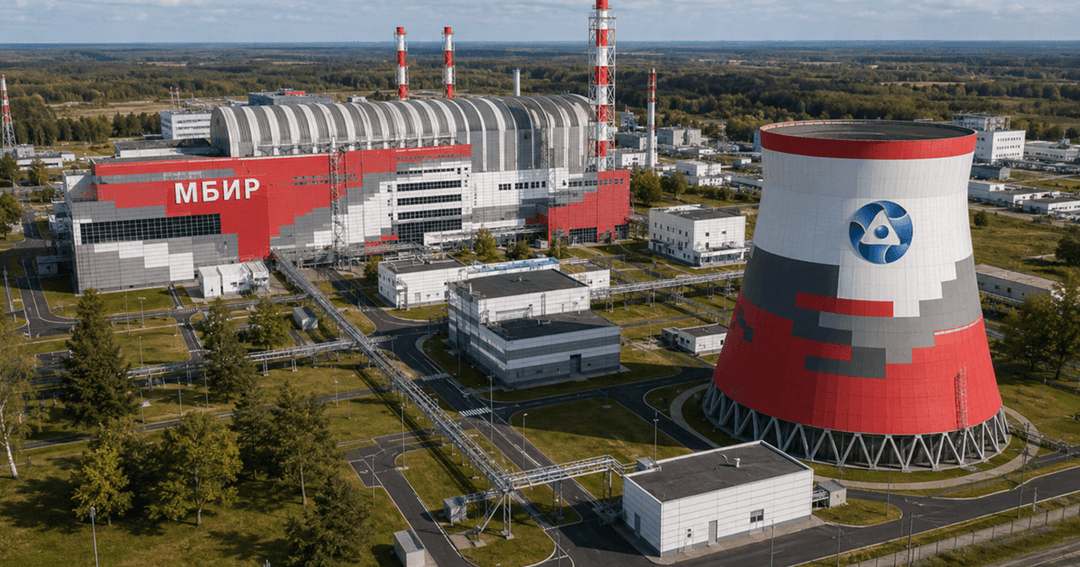
Rosatom CEO Alexey Likhachev linked this direction to the development of Generation IV reactors. The MBIR research reactor in Dimitrovgrad, 150 MW capacity, will provide the scientific and experimental basis for this research. MBIR will also take over the research mission of the operating BOR-60 reactor after the new facility goes into operation.
In November, a steam turbine from the Kaluga Turbine Plant was delivered to the site of the National Research Center NIIAR. The machine is designed to work with MBIR's steam parameters, with a design life of 50 years.
MBIR is being built under the national project Nuclear Technologies and New Energy. Experiments on the reactor must verify materials, fuel, and technical solutions—indispensable elements for scaling up two-component nuclear power and closed nuclear fuel cycle.