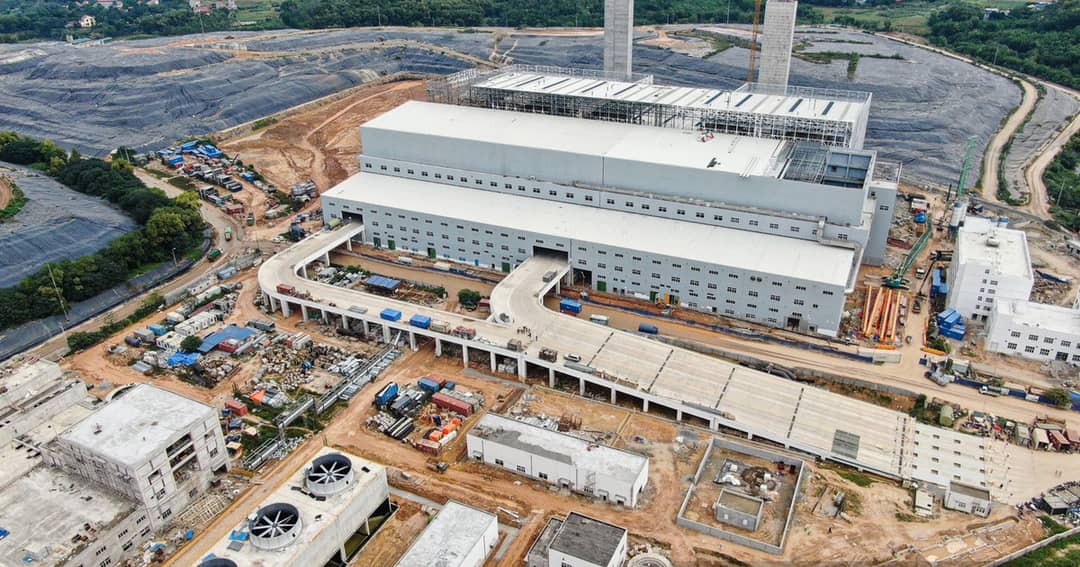
Resolution No. 70-NQ/TW dated 20/8/2025 requires building special mechanisms and policies to strongly develop waste-to-energy systems. Electricity from urban waste treatment, solid waste and biomass is developed without planning scale limits.
Since 2014, Decision No. 31/2014/QĐ-TTg applied a preferential feed-in tariff (FIT) of 10.05 US cents/kWh for waste-to-energy electricity. However, after 12 years, the whole country has only about 8 waste-to-energy plants in operation.
In 2023, urban solid waste averaged more than 38,000 tons/day, increasing 10-16% per year. Waste is still mainly landfilled, occupying large land areas and posing pollution risks.
The FIT price of 10.05 US cents/kWh (about 2,600 VND/kWh) is significantly lower than new baseload sources: 2026 LNG electricity framework price maximum 3,453.72 VND/kWh, offshore wind maximum nearly 3,975 VND/kWh.
Total waste-to-energy power potential in Vietnam is only about 700 MW, realistically only 500 MW because many localities have less than 500 tons of waste/day, making plant construction unfeasible.
Each project takes 7-10 years to prepare and build; pre-construction permit costs already reach 100-200 billion VND. Equipment accounts for 70-80% of total investment, with many key equipment imported.
Waste-to-energy uses domestically available raw materials, less affected by international fuel prices. If sufficient waste is available, plants will generate stable electricity, contributing to supply diversification.
China's experience, with nearly 1,000 waste-to-energy plants, shows the decisive role of a stable price mechanism: Waste-to-energy electricity price fixed at 0.65 CNY/kWh (about 2,600 VND/kWh) for 20-25 years; localities pay separate waste treatment fees of 120-200 CNY/ton (about 480,000-800,000 VND/ton), not deducted from electricity payments; waste-to-energy electricity is prioritized for maximum dispatch.