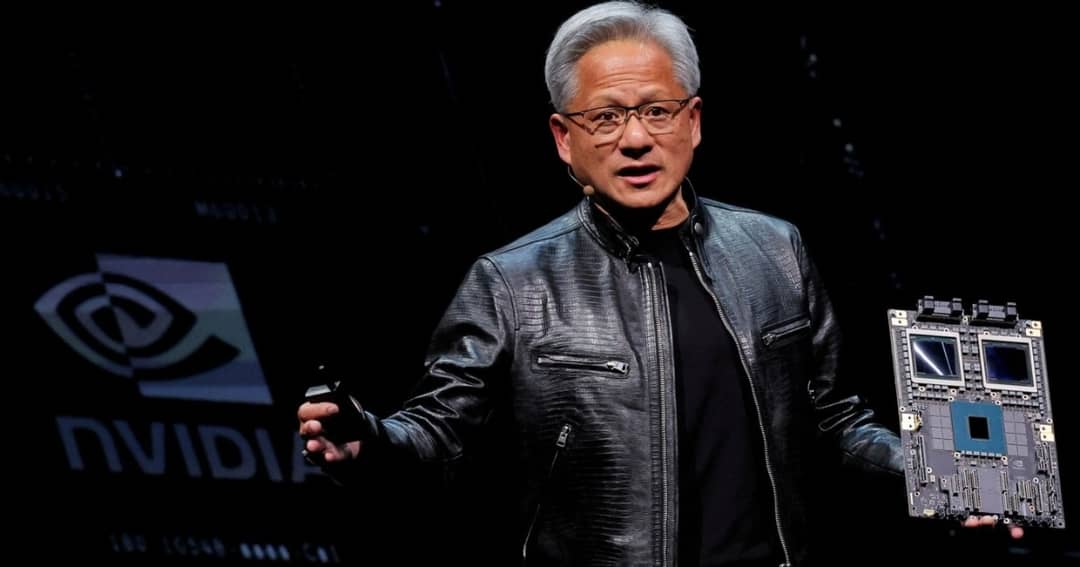
Several major Nvidia server partners, including Dell and Supermicro, have announced temporary suspension of shipments of AI-integrated equipment to four Southeast Asian countries: Singapore, Malaysia, Thailand, and Indonesia. The decision came right after new U.S. export control regulations took effect.
The new rules from the U.S. Department of Commerce require parties to obtain export licenses to ship advanced AI chip lines to these four Southeast Asian countries and Brazil. The agency also set a 90-day deadline for computing infrastructure providers to prove end users are not on the restricted access list.
Southeast Asia is a key stop in Nvidia's global supply chain. Financial reports show the group recorded up to 104 billion USD in revenue through its Singapore entity in 2025, up 72% from the same period last year.
The wave of AI data center construction in Malaysia and Indonesia is facing the risk of delays. According to Bloomberg, international financial organizations have begun suspending billions of USD in financing for digital infrastructure projects in Asia involving major tech groups such as ByteDance, Alibaba, and Tencent.
A typical case is Aolani, a cloud service provider headquartered in Singapore. According to Financial Times sources, banks have suspended a credit package of about 500 million USD for the project to provide high-end computing capacity to ByteDance, pushing the cooperation agreement between the two sides to the risk of collapse.
The impact also extends to AI lab research progress. According to Reuters, AI company Z.AI is likely to delay the launch of its flagship model GLM-5.5 from the end of this year to Q1/2027. Similarly, a Moonshot AI representative said model training cycles could be extended from 6 months to over a year.
Despite legal barriers to exports to Southeast Asia, Nvidia's financial outlook shows significant resilience. According to Forbes, the group has even raised its full-year fiscal 2028 revenue growth forecast from 70% to about 75%, with current quarter revenue estimated to reach the 130 billion USD mark.
Colette Kress, Nvidia's CFO, said: "With demand far exceeding supply, we expect business results to remain strong."
On the stock market, the news that Jensen Huang officially returned as CEO helped Nvidia's stock jump over 31% to 165.05 USD per share at the start of the week. Despite profit-taking pressure and concerns over new regulations, the share price adjusted down 3.91% to 149.3 USD in the fourth session, still nearly 19% higher than before the reinstatement announcement.