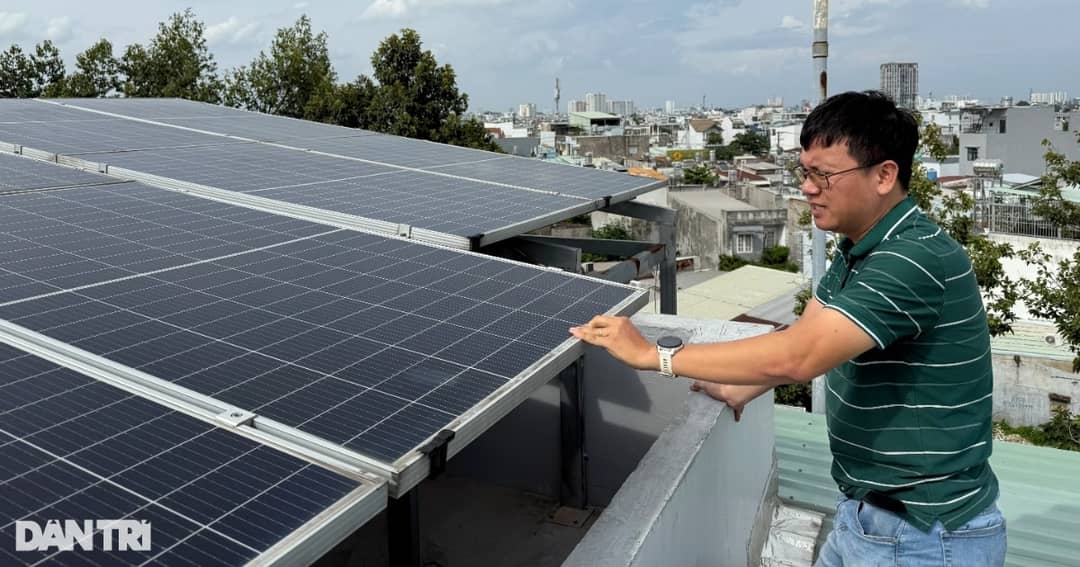
Rooftop solar self-production and self-consumption is being encouraged to exploit renewable energy potential and contribute to energy security. Under the adjusted Power Plan 8, Vietnam targets more than 14 million households installing rooftop solar by 2030, out of a total of about 28 million households.
However, rooftop solar depends on weather conditions, generating mainly during the day, while household and business power demand can peak in the evening. Without a suitable storage solution, excess electricity at certain times cannot be fully utilized.
Mr. Nguyen Anh Tuan, Vice Chairman of the Vietnam Energy Association, speaking at the Renewable Energy Media Talk on November 28, said battery energy storage systems (BESS) will play an important role in Vietnam's power system, especially from now through 2030.
"BESS can become a flexible regulation tool, contributing to improving power system reliability", he said.
Battery storage can respond quickly, supporting frequency regulation, voltage control, and load balancing by storing electricity during off-peak hours and discharging when demand rises. The solution can also reduce investment needs in transmission grids and flexible power sources with high operating costs.
For industrial zones, combining rooftop solar with on-site storage helps businesses proactively manage clean power supply even when solar output declines, optimizing energy costs and meeting rising green energy requirements for production and exports. Storage is also a key condition for expanding direct power purchase agreements (DPPA).
Mr. Bui Xuan Binh, Chairman of the Board and CEO of GG Power JSC, said energy storage should be seen as a key component of modern energy infrastructure, from households to factories and the national grid. GG Power has partnered with international technology firms, rolling out 30 projects for industrial and commercial power in 2026, and targeting plant capacity of around 12GWh by 2027. The company currently has 20 suppliers in its production chain and plans to increase this to about 50 units.
However, GG Power leadership noted the energy storage market still faces issues including policy mechanisms, investment efficiency, technical standards, fire safety, product quality, origin, and manufacturer accountability.