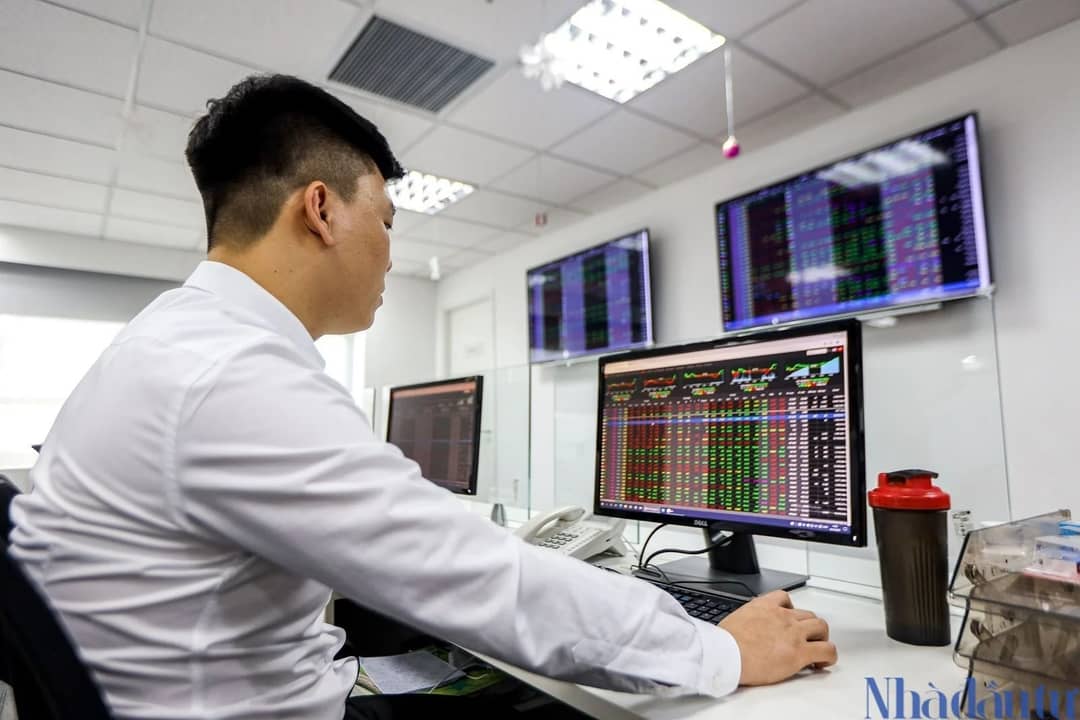
Vietnam's stock market has continued to weaken for over two months since the September 2 holiday. VN-Index now stands at 1,629.68 points, losing nearly 230 points compared to the pre-holiday zone. Trading value on HoSE has narrowed to around 12,000–15,000 billion VND per session, significantly lower than over 17,000 billion VND in July and August.
Many stocks have lost liquidity, falling limit-down for consecutive sessions, even losing 80–90% of market value:
| Stock | Company | Decline | Current price |
|---|---|---|---|
| KOS | Kosy JSC | Nearly 90% | 2,500 VND |
| PNJ | Phu Nhuan Jewelry JSC | 86% | 12,100 VND |
| TIG, DCL, HHP, VTV, THD | Various companies | 50–80% | Not specified |
KOS experienced a chain of 29 consecutive limit-down sessions, price from 30,050 VND/share down to 3,800 VND/share, then continued to weaken and now trades around 2,500 VND/share. PNJ has continuously seen limit-down sessions from early July to date, market value down to 12,100 VND/share, equivalent to an 86% decline since the beginning of the year.
According to Mr. Nguyen The Minh, Director of Investment Banking Block, Deputy Director of Business Block, General Director Board of An Bình Securities Joint Stock Company (ABS), liquidity pressure and broken capital sources are making business owners unable to cope with selling waves.
"After about 3–4 consecutive limit-down sessions, investor accounts may approach warning or asset handling thresholds. If the stock continues to fall another 2–3 sessions, the account may hit force sell (margin call liquidation)."
Mr. Minh assesses that the phenomenon of consecutive limit-downs and forced liquidation mainly concentrates on some highly speculative stocks or companies facing individual difficulties, not yet forming a widespread wave across the market. However, widespread cross-selling risk appeared in 2022.
Regarding outlook, Mr. Minh believes the Government is determined to reduce interest rates and this is an achievable management target. If the interest rate cut scenario happens next year, the stock market may be forming a base to prepare for a new growth cycle.
For investors holding a lot of cash, Mr. Minh advises continuing to wait, at least until mid-December, before starting to search and screen investment opportunities. For investors holding only stocks with cash, not facing financial or margin pressure, they can continue holding and wait for market developments.