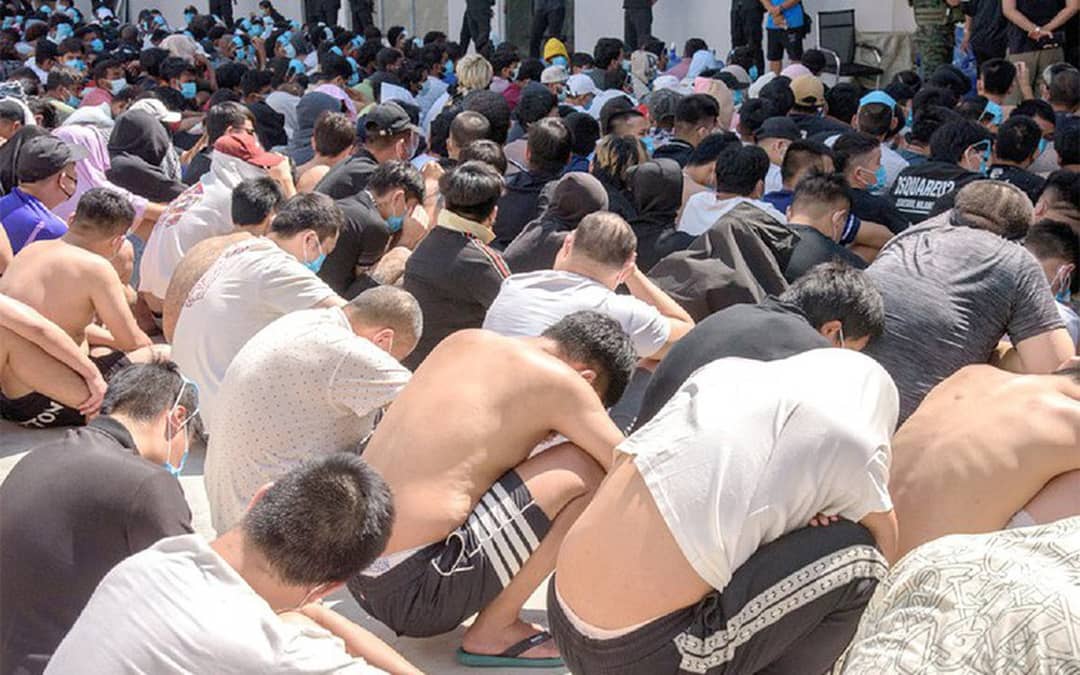
The US House passed the Dismantle Foreign Scam Syndicates Act (DFSSA) on November 26, aiming to dismantle transnational criminal organizations operating large-scale online scam centers in Southeast Asia.
Cambodia and Myanmar are identified as locations where many scam syndicates are hiding.
A notable provision requires the US President to establish an interagency task force within 30 days of the law's enactment. The task force is led by the US Secretary of State, with participation from the State Department, Department of Justice, Department of Homeland Security, and Department of the Treasury, along with private-sector partners in the region.
The bill also expands sanction tools. Foreign officials who knowingly assist or profit from scam activities may face visa restrictions and asset freezes.
The US may share high-resolution satellite imagery with non-governmental organizations and researchers to document and monitor violations at scam compounds.
Within 180 days of the law taking effect, the US administration must build a comprehensive strategy to implement countermeasures. The bill also requires regular and annual reports to Congress over a 5-year period, updating on sanctions, victim rescue, and scam center closures.
Representative John Moolenaar said these networks take over 10 billion USD annually from American families.
According to the US State Department, in 2025 alone, Americans suffered at least 18.2 billion USD in losses due to scam centers in Southeast Asia. Globally, losses from this activity are estimated at around 40-65 billion USD per year.
The bill now needs Senate consideration before it can be sent to the President for signature.