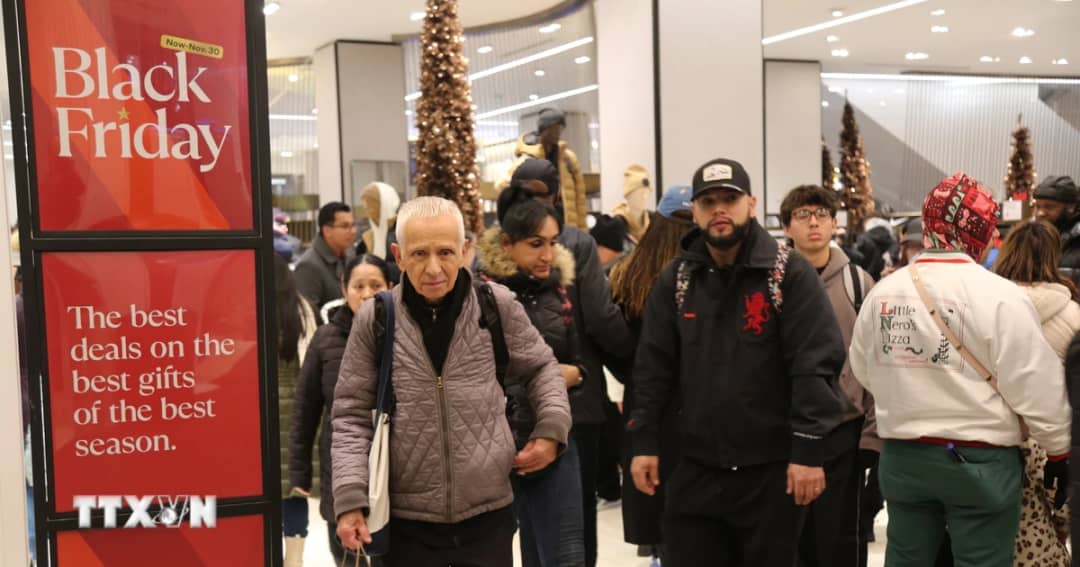
US holiday season spending, starting from Black Friday on November 27, is expected to rise 4-6% from last year's peak. However, price increases are expected to account for most of the spending growth, with inflation at 3.8%, about 1 percentage point higher than the level recorded each year in the past two years.
The National Retail Federation (NRF) forecasts retail sales in November and December will rise 4.2% from the same period last year, exceeding 1 trillion USD. Mastercard Economics Institute and EY-Parthenon both forecast growth of more than 5%.
Of 1,200 people surveyed by Deloitte in October, 87% plan to shop during the 5 days from Thanksgiving to Cyber Monday on November 30, the highest rate in a decade. However, NRF's November survey shows 82% of consumers are looking to restrain holiday spending, such as choosing more affordable gifts.
Retailers Target, Dollar Tree and Kohl's all reported customers are tightening spending. Toy prices, which use a lot of plastic, have risen 13.2% since the start of the year. Mattel, maker of Barbie dolls, cut its full-year business forecast this month as customers hesitated at higher prices.
According to UBS analysts, the decline in the US stock market could cause wealthier shoppers to spend less aggressively on electronics and accessories.
Ryan Orabone, consultant at Spaulding Ridge, said the deepest discounts may come closer to Christmas as both shoppers and retailers wait to see how the market develops.