The National Assembly XVI passed the Law amending and supplementing some articles of the Law on Management, Use of Weapons, Explosive Materials and Support Tools, Law on Fire Prevention and Fighting and Rescue, Salvage on 20/11/2026, effective from 01/3/2027. This stabilizes the reform of shifting from prior inspection to post-inspection on fire prevention and fighting (PCCC).
From 1/7/2026, under Government Resolution No. 66.18/2026/NQ-CP, police agencies no longer inspect and accept fire safety and issue acceptance approval documents on PCCC. Investors self-organize acceptance, take full responsibility for results, and proactively decide the time to put projects into operation.
According to data from the Department of Fire Prevention and Fighting and Rescue, in nearly 5 months up to mid-November 2026, there have been 1,134 projects nationwide self-accepted by investors, updating data on the joint management system and then put into operation. The time to put projects into operation is shortened, compliance costs are significantly reduced.
According to Mr. Trịnh Xuân Nam, Director of an enterprise at Lại Yên Industrial Zone, Hoài Đức, Hà Nội, the abolition of the procedure for inspecting fire safety acceptance has helped enterprises reduce one administrative procedure, shorten the time to complete procedures after project completion, thereby being more proactive in the plan to put projects into exploitation and use, saving time and compliance costs.
The new law also extends reform to the stage of production and business of PCCC equipment. Licensing procedures before putting PCCC and rescue equipment, materials, fire prevention and fighting components into circulation are abolished; organizations and individuals only need to declare product information before circulation and take full responsibility for quality according to the law on product quality and goods.
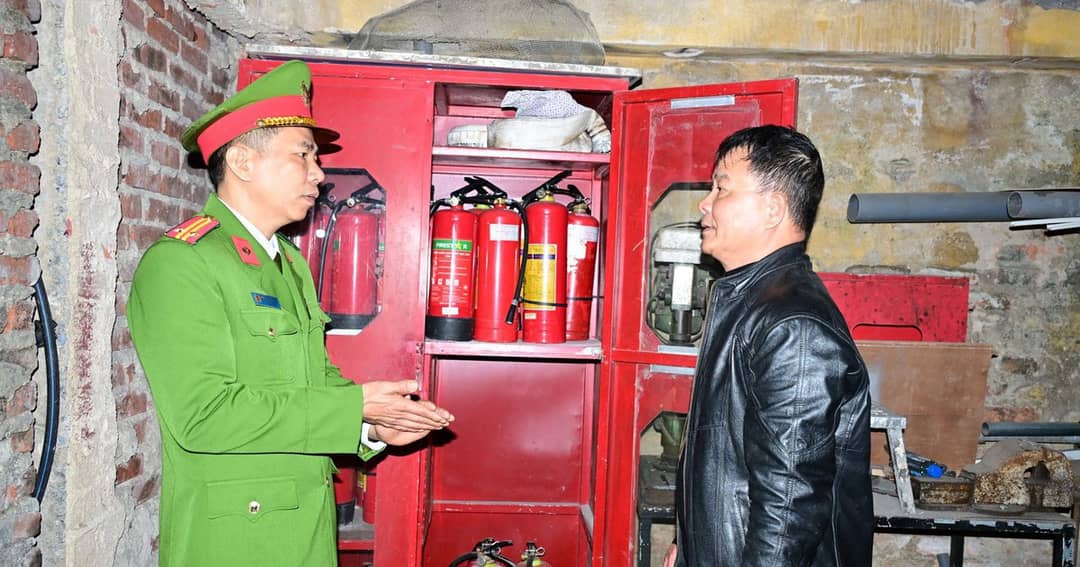
Competent agencies use data declared by investors on projects to monitor, focus inspections on high-risk places such as facilities prone to fire and explosion, crowded places, or places showing signs of violations. Police agencies still conduct periodic inspections according to regulations and surprise inspections when there are signs of violations, complaints, denunciations or when needed to ensure security and order.
Each project when put into use is declared on the Database on Fire Prevention and Fighting and Rescue; fire alarm transmission equipment connects to the Command Center to help management agencies receive fire alarm signals and error signals from facilities in real time. From that data, facilities are classified by risk level to determine appropriate inspection frequency and content. The entire force applies a unified set of inspection guidelines for newly put into operation facilities. Management based on data and risk helps detect risks early and ensures inspections are focused, without causing trouble for enterprises.
Investors who put projects into operation when acceptance is not completed or not met, declare incorrectly, forge documents, or reopen when old errors are not corrected will face fines, suspension, and in serious cases, criminal liability. Responsibility of each subject, from investor, contractor to supervision unit, is clearly defined.