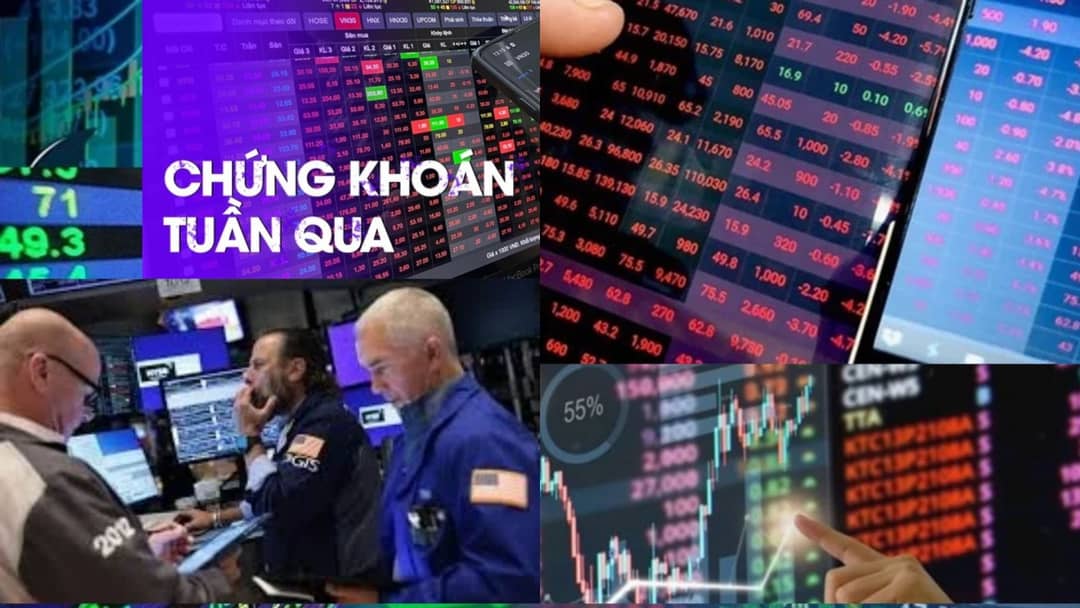
Trading week Nov 23–27, VN-Index rose to 1,706 points on Nov 25 before broad selling on Nov 26 sent the index down nearly 58 points, or 3.42%. The final session Nov 27 rebounded more than 24 points on bottom-fishing in oil & gas, real estate, fertilizer and steel, but was not enough to erase earlier losses. For the week, VN-Index fell in 3 of 5 sessions, closing at 1,653.9 points, down 34.89 points from the previous week.
Heavyweights pressured the index: VIC took nearly 10.3 points, VHM nearly 2.2 points; VCB, TCB, BID, CTG, VPB each took nearly 1 to nearly 2 points. HPG, VCK, MWG fell under 1 point. On the positive side, GAS added more than 1.1 points, BSR more than 0.6 points. Top 10 gainers contributed only more than 3.9 points.
HNX-Index fell from 234.59 to 228.11 points, losing nearly 6.5 points. Pressure came from THD (more than 1.3 points), KSF (nearly 0.6), MBS (nearly 0.5), SHS (nearly 0.4); PVS and DTK gained about 0.4 point each.
Foreign investors unexpectedly net bought about 620 billion VND on Nov 27 across all three exchanges, focusing on FPT (nearly 182 billion VND) along with MBB, BSR, HPG. Proprietary traders of securities firms net bought throughout the week with total value about 450.8 billion VND, mainly in the first two sessions before the tariff shock.
According to TPS, U.S. tariff information mainly affects investor psychology and short-term expectations rather than directly impacting the profits of all enterprises immediately. The degree of impact will clearly differentiate depending on the proportion of export revenue to the U.S., product structure, and negotiation capacity of each unit.
Public investment disbursement rate as of Nov 19 reached 77.3% of the plan according to Ministry of Finance data. The Ministry of Finance and OECD market report released Nov 26 emphasized improving governance quality, information transparency, and applying international financial reporting standards, creating a premise for long-term capital attraction differentiation.