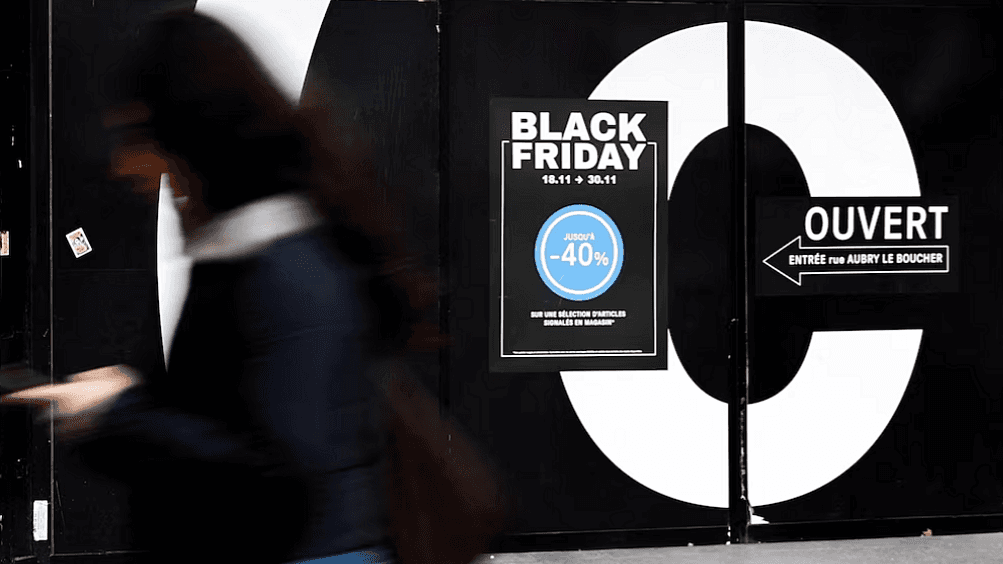
Many global brands chose to skip Black Friday this year to protect profits, send sustainability messages, or stand out with budget-conscious shoppers.
Pinko, an Italian fashion brand, skipped the event for the first time. Chairman Pietro Negra said discounting could become a vicious cycle and does not guarantee the industry's future. Pinko estimated losing about 2 million euros (2.19 million USD) in revenue, but the impact on profitability was much smaller as he focused on profit margins.
The context is that retailers worldwide have faced a difficult year as Middle East conflict drove inflation back up, consumers tightened their wallets, and only bought with significant discounts. After 5 consecutive years of high inflation, Americans are increasingly skeptical of retailer pricing strategies.
"Trust has seriously declined," said Shikha Jain, researcher at consultancy Simon-Kucher. She noted consumers are increasingly saving money and tired of inflation and financial hardship many Americans face.
Some brands took other approaches: REI, a US outdoor retailer, closed stores and gave employees the day off; The Ordinary, an Estée Lauder beauty brand, closed stores and organized blood drives in New York and Toronto. UpCircle, a UK beauty brand, ran a 25% discount on all products while criticizing overconsumption; in just 3 weeks before Black Friday, UpCircle earned revenue equivalent to 20% of its annual online sales.