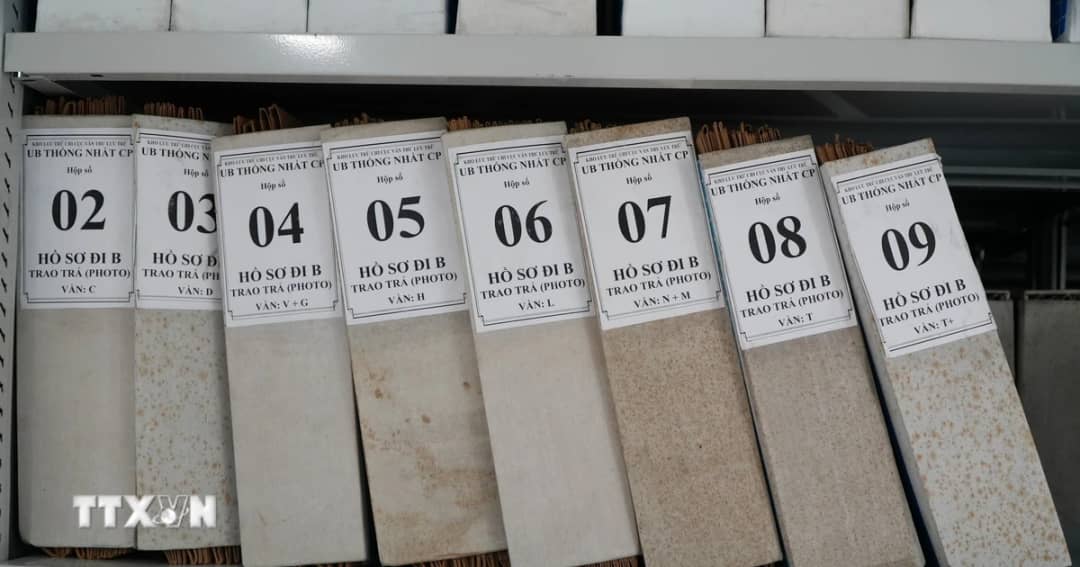
The Government has approved the Master Plan “Building and Operating the National Digital Archive Platform for the period 2026-2030”, marking a shift in archive document management from fragmented to centralized, from document management to unified data governance in the digital environment.
The platform is expected to form a shared data infrastructure in the archive field, serving state management, developing digital government, and effectively exploiting the nation’s valuable document resources.
The core point is changing the approach to archive work. Archive data is defined as a strategic data asset of the State, must be governed according to the principles of “accurate, sufficient, clean, alive, intact, unique, unified, centralized, interconnected, shared.” Data is created and standardized from the source and inherited throughout the lifecycle according to the principle “create once, use many times.”
According to the roadmap, by 2028, the Platform completes core functions and goes into operation; pilot connection and automatic receipt of electronic documents from the Document Management and Administration System. By 2029, expand automatic connection to receive digital documents, ensuring authenticity, integrity, and long-term verifiability. By 2030, 100% of ministries, sectors, localities, and state-owned enterprises within the scope of the Project connect, exploit, and use the platform according to regulations.
The Vietnam National Archives document database attached to the Platform is managed centrally on the National Data Center infrastructure. The Project also sets a goal to complete a two-tier backup model for documents under the backup scope of the Vietnam National Archives, ensuring safety, integrity, and recovery capability.
According to Mr. Đặng Thanh Tùng, Director General of the State Records and Archives Department, archive documents carry multiple layers of value, including information, legal, historical, and especially cultural, memory, identity, and tradition values. Digital transformation sets a dual task for the archive sector: preserving cultural and historical values, while becoming a component of data infrastructure serving modern governance.
Artificial intelligence, big data, and appropriate digital technologies will be applied to support intelligent search, summarization, analysis, and data mining, gradually transforming archive documents into information and knowledge sources serving state management and research, education, and innovation activities.