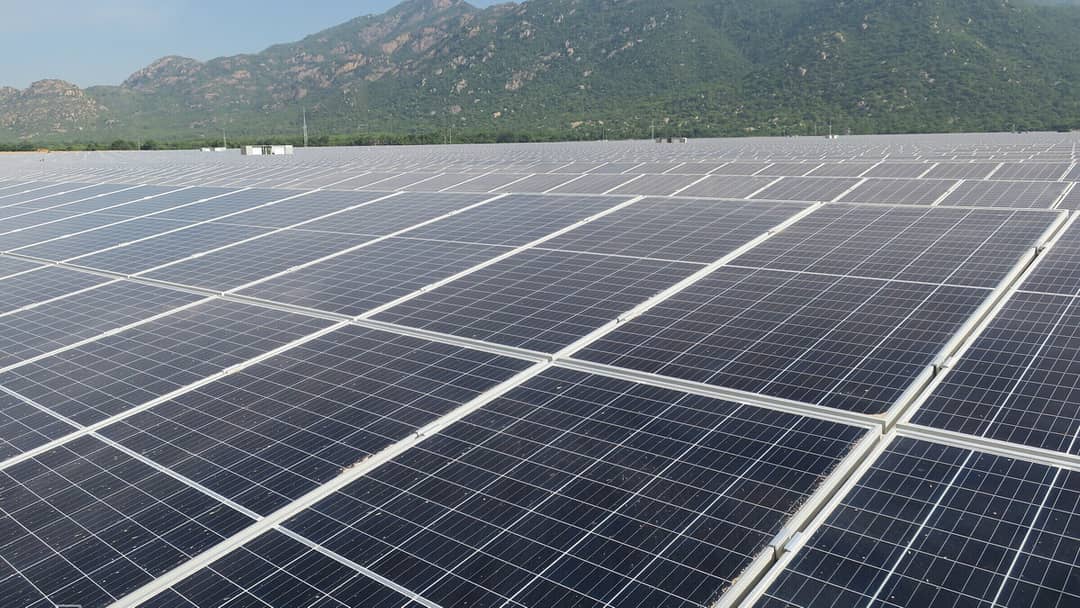
The seminar "Application of solar power in agriculture: Green energy solution" was held on 27/11. According to Mr. Do Huy Thiep, Deputy Director of the Institute of Economics and Rural Institutions (Vietnam Academy of Agriculture), solar power helps reduce electricity costs, supplement on-site energy sources, and contribute to stabilizing power quality for production.
Research shows an industrial chicken farm with 2,600 m2 of coop roof installing a 50 kWp system without battery storage, investing about 325 million VND, meeting more than 33% of electricity demand, saving nearly 116 million VND in electricity costs annually and breaking even in 2.81 years.
A super-intensive shrimp farm of 12 ha, consuming about 100,000 kWh/month, installing a 200 kWp system without battery storage, can meet nearly 23% of electricity demand. Net savings calculated at more than 524 million VND per year, payback period about 3.6 years.
Mr. Thiep said battery storage can provide backup power for water pumps and aerators during grid outages, helping limit risks in shrimp farming. However, equipment investment costs remain high and need to be weighed against land lease terms and facility utilization efficiency.
In Thai Nguyen, Mr. Ngo Viet Thuat, Director of Thuy Thuat Tea Cooperative, managing 15 ha of tea, also wants to apply solar power to reduce production costs. According to Mr. Thuat, the main processing area (factory, storage, and product introduction area) "consumes" about 7-8 million VND per month, with some months reaching 15-16 million VND. Many member households also spend 2-3 million VND on electricity monthly.
After visiting several rooftop solar models, Mr. Thuat has not decided to invest because initial capital could reach several hundred million VND. Tea households still need production reinvestment funds, making it hard to spend a large amount at once.
He hopes the cooperative will be trained on applying solar power to irrigation, drying, and storage, and access support programs and preferential capital sources.
Mr. Nguyen An Binh, Director of Khanh An Energy Co., Ltd., said his company has invested in rooftop solar to supply power to its own factory. After surveying many rice mills in the Mekong Delta, he sees this as a potential customer group but electricity demand fluctuates by season.
Factories usually operate concentrated during the rice harvest season; between seasons, some stop production for months. Meanwhile, solar power systems generate electricity year-round. If the factory only uses electricity for a few months, investors find it difficult to utilize electricity generated during the remaining time and calculate capital recovery.
Mr. Binh proposed a mechanism allowing solar power projects serving agriculture to sell excess electricity. According to him, if there is an outlet for electricity not used by the factory during the off-season between two crops, businesses will have more basis to calculate investment efficiency.
In Khanh Hoa, currently 23 out of a total of 454 livestock farms apply solar power. However, models remain small, scattered, lacking comprehensive assessment of economic, technical, and environmental effectiveness. High investment costs, difficult access to green credit, lack of technical standards and land management guidelines are barriers to scaling up.
Mr. Thiep proposed surveying energy demand by locality, sector, and production method to select suitable models. Production facilities also need to be connected with banks and solar power investors to access green capital.