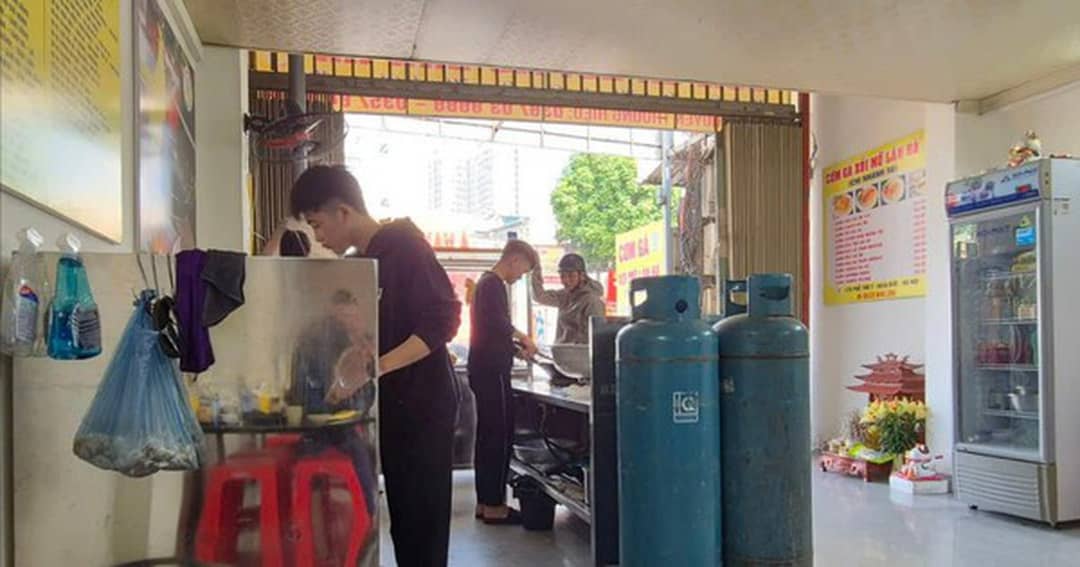
Two gas explosions have just occurred in Ho Chi Minh City and Hanoi, sounding the alarm on fire prevention and fighting (PCCC — fire prevention and fighting) safety at businesses operating in residential areas.
The explosion at Vĩnh Hồ residential complex, Nguyễn Văn Tuyết Street, Hanoi on November 24 occurred while the building was being renovated into a restaurant. The cause was gas leakage, combined with oxygen in the air, meeting a suitable heat source leading to fire and explosion of the gas mixture. The earlier explosion at a gas business on Bùi Văn Ba Street, Tân Thuận Ward, Ho Chi Minh City on November 13 also caused serious consequences.
Inspections at old residential complexes such as Nguyễn Văn Tuyết, Nghĩa Tân, Giảng Võ show many eateries operating in cramped spaces, mixed with housing. At Giảng Võ complex, during the inspection on the afternoon of November 25, functional forces found gas cylinders, gas stoves and pipes not shut off even when not in use; surrounding areas had old electrical wiring and many flammable materials. Some food and beverage establishments concentrate many gas cylinders in spaces of only over 20m².
Hanoi currently has more than 2,100 residential complexes and old apartments, most of the ground floor area is rented for business.
Lawyer Nguyễn Thị Minh Khuê (Hanoi Bar Association) affirms that business owners must be responsible for PCCC safety conditions within their management scope, from selecting equipment, installing gas pipeline systems to inspection, maintenance and staff instruction. If violating, depending on the nature, they may face administrative, civil or criminal liability.
Joint inspection teams in Hanoi continue to inspect production, business and gas use activities. For illegal gas extraction, police will investigate and handle according to legal provisions, including prosecution if there is sufficient basis.
The lawyer recommends that competent authorities organize specialized inspections for restaurants, eateries and businesses using gas in densely populated residential areas, old residential complexes and combined housing-business housing. Inspection should not stop at fire fighting equipment but must go deep into installation conditions, gas system operation, gas cylinder storage area, ventilation capacity, gas leak warning devices and evacuation routes.