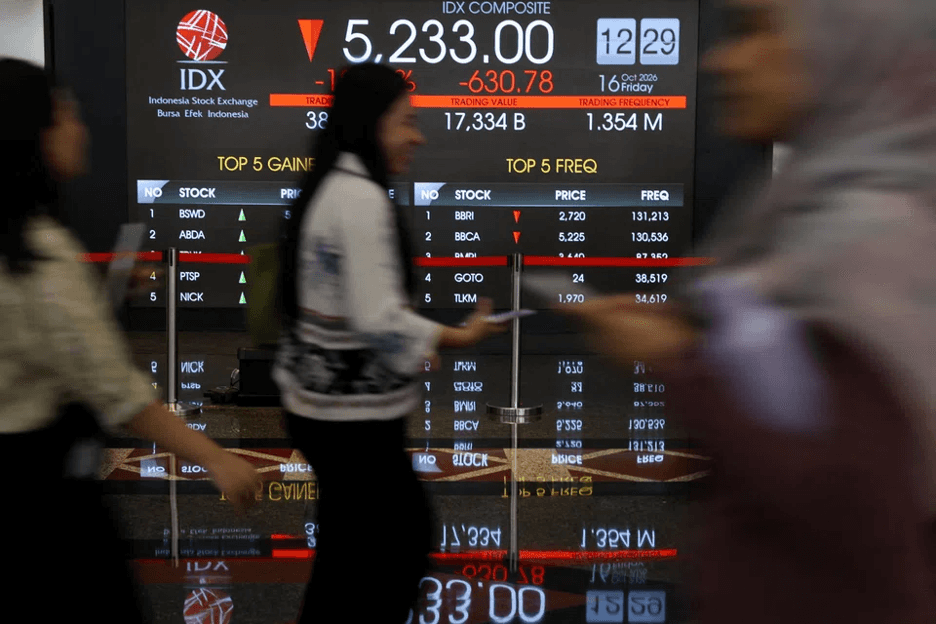
Indonesia has launched a comprehensive overhaul of market transparency, tightening free-float share requirements, disclosing concentrated ownership, and increasing surveillance of suspicious trades. Tougher penalties and deeper reforms are seen as the right direction as Southeast Asia's largest economy faces growing pressure to reform its $500 billion capital market before MSCI concludes its review in April 2027.
Oxford Economics estimates that a downgrade to standalone market status could force passive funds tracking MSCI emerging market indices to sell $3.7-10.3 billion in Indonesian stocks.
"We need to see stronger law enforcement, including criminal prosecution when violations are proven, appropriate penalties and consistent disciplinary measures from regulators and the government… Investors need to be assured that market manipulation will not be tolerated, regardless of who is involved" – Henry Wibowo, co-founder and director of Alphagate Capital.
Indonesia's Financial Services Authority (OJK) crackdown on market misconduct has sanctioned more than 971 organizations and individuals, with total fines of about 2.5 trillion rupiah. The agency has completed review of 41 cases, while 122 others are still being processed.
MSCI is concerned whether Indonesian stock prices accurately reflect market demand and whether investors have enough information about the real owners of the stocks they trade. An estimated 60-70% of listed companies in Indonesia are owned by family conglomerates. Indonesia has tightened reporting requirements for beneficial owners holding at least 10% of a listed company's shares and introduced the "High Shareholding Concentration" (HSC) framework. Since November 10, stocks with high ownership concentration have been removed from benchmark indices.
In October, MSCI warned that reform progress remained insufficient and inconsistent, and Indonesia faces the risk of downgrade from emerging market to standalone market. The Jakarta Composite Index has fallen nearly 40% since the start of the year, and the rupiah has weakened nearly 9% this year.