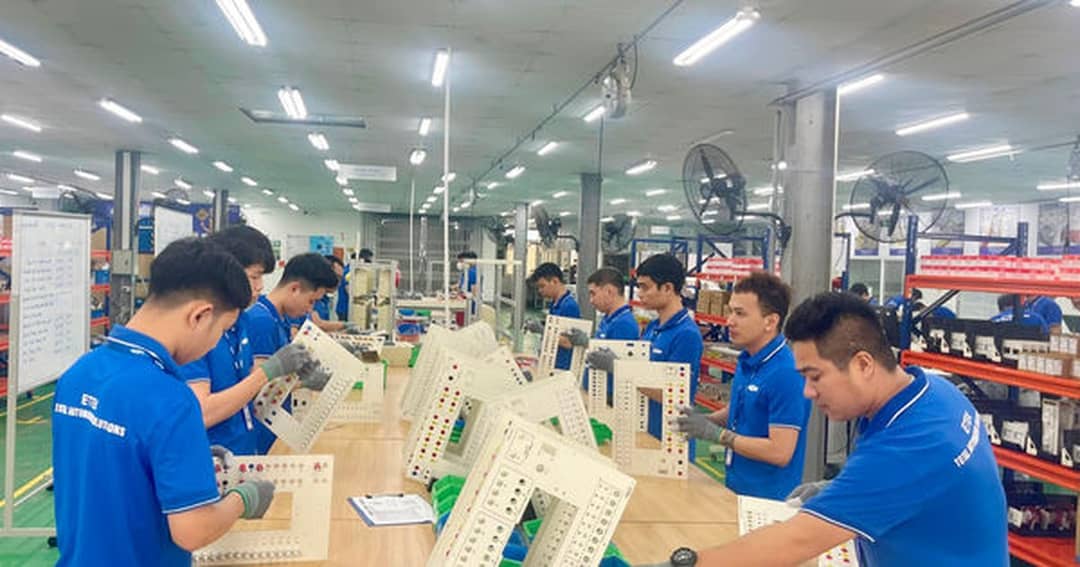
Hanoi attracts over 4 billion USD FDI in first 9 months of 2026
The foreign direct investment sector in Hanoi maintained high growth, expanding over 35% annually during 2021-2025. The city attracted nearly 15 billion USD in FDI over these five years, and in the first 9 months of 2026 alone drew more than 4 billion USD. By end of 2025, the FDI sector created jobs for about 288,000 workers.
Connection gap between FDI and domestic firms
However, links between FDI enterprises and domestic firms remain limited. Small and medium enterprises account for about 98% of all operating enterprises but face constraints in capital, technology, management, and market access. TS Mạc Quốc Anh, Vice Chairman and General Secretary of Hanoi SME Association, said the biggest difficulty is not only capital but also finding customers and maintaining stable output.
Mr Lê Trung Hiếu, Deputy Director of Hanoi Department of Finance, pointed out the two sides do not truly “understand each other”: domestic firms do not clearly know foreign investors' ordering requirements and standards, while FDI firms lack full information on domestic suppliers' capacity.
Solutions for substantive connection
TS Nguyễn Anh Tuấn, Chairman of VAFIE, proposed Hanoi launch a program to promote linkage between capital enterprises and foreign firms, connecting about 300 enterprises capable of producing components and parts with major buyers such as Samsung, LG, Canon, Honda.
Hanoi Department of Finance will change its FDI attraction approach, identifying investors' planned capital, land use, job creation, and procurement demand in Vietnam, then publishing this information on the Department's website and the Hanoi Investment Promotion and Enterprise Support Center. Connection will work first with FDI firms to identify their product and service needs, then select capable Vietnamese firms for sector-by-sector matching.
On financing, the Department will study credit guarantee tools linked with banks to help firms access capital based on projected orders. Domestic SMEs must also proactively build capacity, pursue digital transformation, green transition, secure energy supply, and improve workforce quality.