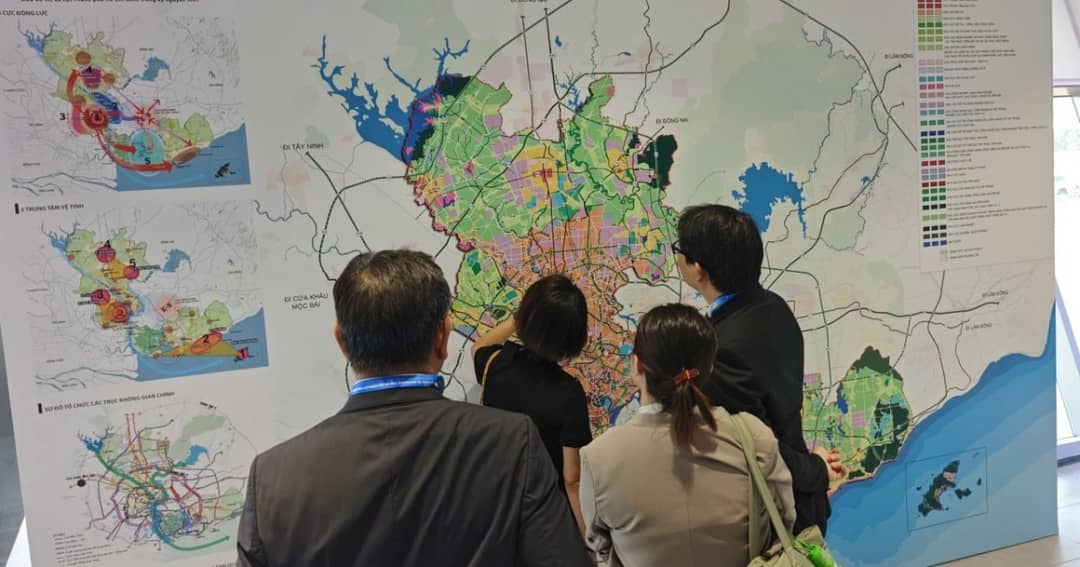
HCMC's 100-year master plan opens multi-polar development space after merger, covering 6,772 km2 with 168 administrative units. The city sets three core functions: finance, high technology, and industry, plus four strategic drivers: seaports, logistics, airports, and tourism.
HCMC pursues the “15-minute city” and “30-minute multi-centered city” models. By 2050, the city plans to develop about 960 km of urban rail (MRT) along with 450 km of light rail and tram, raising public transport passenger share to 35-50% by 2030 and 65% during 2045-2050.
On financial resources, the Vietnam International Financial Center - HCMC (VIFC-HCMC) announced 7 new members. Together with the first 10 members announced at the Autumn Economic Forum 2026 (expected to mobilize and invest $2.7 billion by 2027), total capital expected through VIFC-HCMC by 2030 reaches about $7.7 billion, helping connect financial markets directly with investment, production, and business.
Mr. Chad Ovel, CEO of Mekong Capital, praised the VIFC model for its much lower operating costs than many long-established international financial centers such as Cayman Islands, Mauritius, or Luxembourg, combined with attractive government incentives. He said Mekong Capital plans to mobilize capital through this structure and increase lending to key national sectors and areas benefiting from consumption growth as GDP per capita rises.
However, Mekong Capital leadership pointed out Vietnam faces a large capital gap to achieve high growth and complete infrastructure, especially as foreign investors on the stock market net sold nearly $6 billion last year and continue selling heavily this year.
To attract large investment funds committed to long-term capital, Mr. Ovel emphasized two prerequisites: first, building an international-standard legal framework and dispute resolution mechanism, with modern, independent, and effective courts to build investor confidence; second, developing a banking system experienced in fund management within the center — as VIFC still has no bank established inside the zone, preventing investors from opening accounts to bring capital in and disburse to the market.