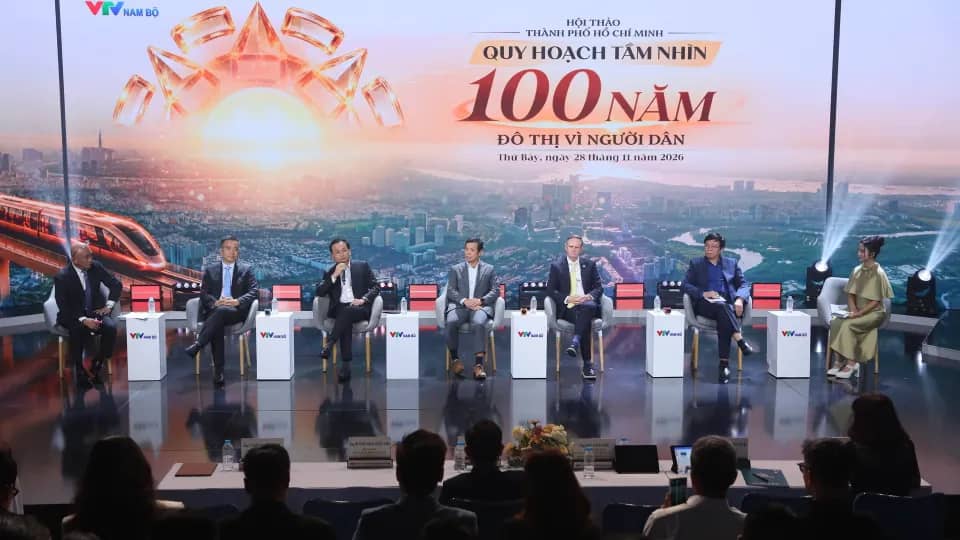
Ho Chi Minh City's 100-year plan opens the ambition to build a regional and global metropolis. However, between ambition and reality lies a gap in management capacity, financial resources, and implementation capability.
Mr. Nguyễn Đỗ Dũng, CEO of enCity, recalled lessons from the Nam Sài Gòn development: jobs, transport infrastructure, and energy were established before the real estate market boomed. Each new urban center must have the capacity to create jobs, attract businesses, and provide essential services, rather than just expanding housing space.
By 2030, HCMC targets completion of 8 urban railway lines with a total length of about 255 km. Metro Line 1 is already operational and Metro Line 2 is under construction. This goal requires major preparation in investment, site clearance, capital mobilization, and construction capacity.
To implement the plan, the city will combine public investment, private capital, foreign direct investment, public-private partnership (PPP), local government bonds, green bonds, and development funds. TS. Nguyễn Quang (UN-Habitat Vietnam) proposed a Land Value Capture (LVC) mechanism to recover part of the land value increase from metro investment and reinvest in infrastructure.
HCMC also targets adding about 200,000 social housing units during 2026 to 2030, prioritizing locations near workplaces and public transport hubs. The city will build an implementation plan, identifying priority projects, investment phases, funding sources, and investment forms, serving as a basis for the HCMC People's Council to exercise oversight.
"Land value increase should not become private benefit for a few parties; it must be transparently recovered for reinvestment in the public interest" — TS. Nguyễn Quang