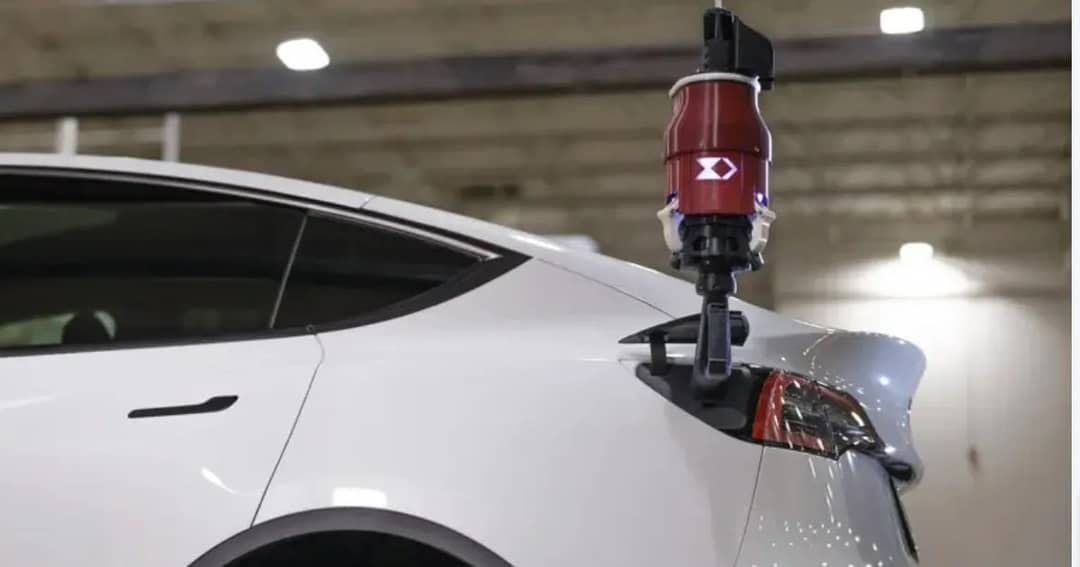
Circular 31/2026/TT-BXD of the Ministry of Construction takes effect on December 15, amending QCVN 04:2021/BXD on national technical standards for apartment buildings. The new regulation applies not only to new construction but also requires existing apartment buildings to survey and upgrade parking areas, EV charging areas, and battery swap areas within 6 months.
Reality in Ho Chi Minh City shows many buildings are facing difficulties. At an apartment in An Khánh ward, the management board has arranged an electric motorcycle parking area near the first-floor lobby, transparently published charging fees, and arranged reasonable fire-fighting equipment. However, in Thanh Mỹ Tây and Bình Trưng wards, many apartments have arranged parking areas but have not installed charging infrastructure due to resident opposition, citing concerns over fire safety and shared electricity costs. At a social housing apartment in Vĩnh Lộc, electric motorcycles are not allowed into the basement parking, forcing residents to park at private lots outside.
Mr. Nguyễn Duy Thành, Vice Chairman of the Ho Chi Minh City Apartment Management and Operation Association (HCMO), said apartment maintenance funds cannot be allocated to new expense items such as EV charging infrastructure. Many old apartments are already overloaded in both electrical load and parking area. Inviting third-party units to install charging stations in public spaces such as lobbies or ground floors without authorization may fall into encroachment on common property and can be administratively fined up to hundreds of millions of VND.
The standard requires charging areas to be prioritized outdoors, on the ground; if not possible, only then consider semi-basement or basement. Charging areas in basements must have effective solutions to release vehicles in case of fire or isolate burning vehicles. Charging areas must be separated from other areas; separate zones for electric cars and motorcycles, electric scooters, electric bicycles. The standard limits the number of charging spots in each zone and requires automatic fire alarm, automatic fire suppression, smoke extraction ventilation, surveillance cameras, and emergency power cut. The power supply system for the charging area must be designed separately from other loads of the building, meaning an apartment cannot simply use the existing electrical system to install many charging stations without assessing infrastructure capacity.
"Cannot not do it, but doing it may be wrong" - Vice Chairman of HCMO assessed that Circular 31 lacks detailed implementation appendices for the long-standing reality of old apartment buildings.