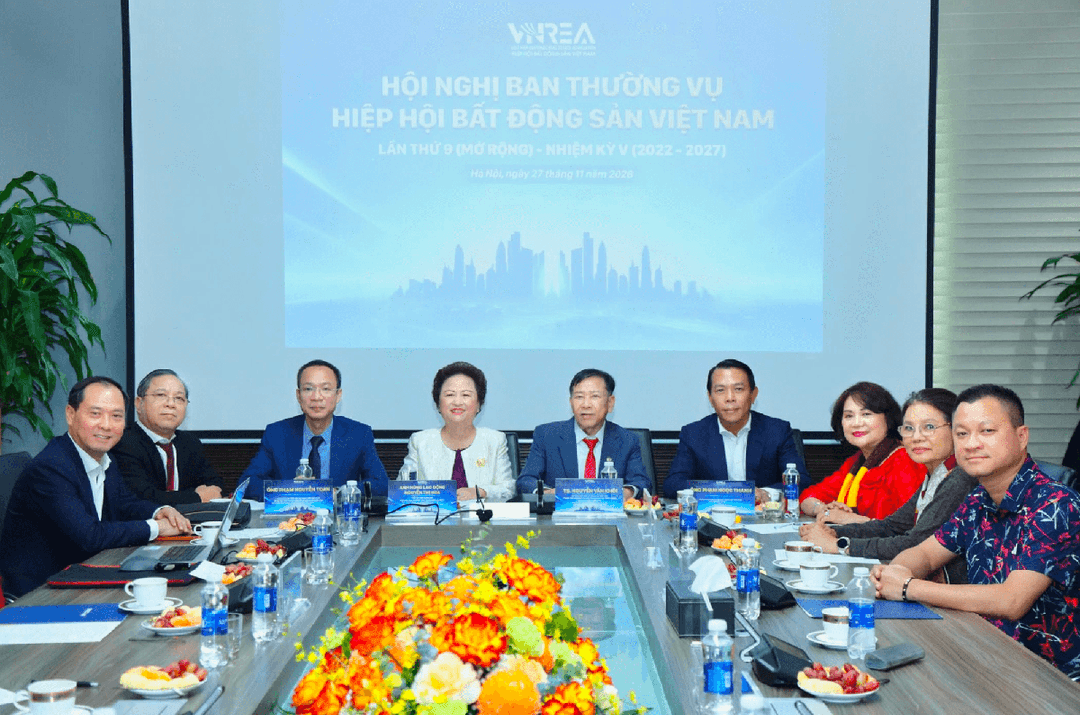
At the 9th Expanded Meeting of the Standing Board, Term V (2022 – 2027) of the Vietnam Real Estate Association (VNREA) held on the morning of 27/11, experts and businesses identified five major bottlenecks hindering Vietnam's real estate market in 2026: uneven recovery, weak liquidity; institutional and procedural bottlenecks for projects; supply-demand imbalance when home prices far exceed people's incomes; difficult access to medium and long-term capital; and limitations in governance, digital transformation, and ESG standards of enterprises.
Assoc. Prof. Dr. Nguyễn Văn Khôi, Chairman of VNREA, assessed that 2026 continues to focus on removing institutional bottlenecks and completing the legal system, focusing on amending the Land Law, Housing Law, and Real Estate Business Law.
Regarding interest rates, Assoc. Prof. Dr. Lê Xuân Nghĩa forecast that by mid-2027 interest rates will have slight room to cool down, creating conditions for the real estate market to enter a more stable phase from 2028.
Prof. Dr. Trần Kim Chung affirmed that Vietnam still receives attention from international investors and the space for real estate development is expanding greatly with new real estate products.
Labor Hero Nguyễn Thị Nga, Chairman of BRG Group, called for attention to capital allocation mechanisms and credit access for real estate enterprises.
Mr. Trần Anh Tuấn, Chairman of TUTA Joint Stock Commercial Company (TUTA Group), proposed that from 1/1/2028, when the mechanism of determining land prices based on land price tables multiplied by adjustment coefficients is applied, the market will move to a new method of land price determination.
Mr. Nguyễn Đức Cây, Chairman of the Board of Directors of Constrexim-HOD, expressed joy that the three laws on land, housing, and real estate business have just been passed by the National Assembly, but recommended continuing to remove specific obstacles at the level of documents under the law.