Vietnam Television Southern Region (VTV Southern Region) organized the seminar “Ho Chi Minh City planning 100-year vision - City for people”, with the participation of Keppel Group, Phú Long Group and Nomura Vietnam.
Mr Lý Khánh Tâm Thảo, Head of Master Planning Department, Department of Planning and Architecture of Ho Chi Minh City, said the future urban structure is organized into 5 growth poles:
- Core center: finance, international services and administration
- East: innovation and high technology
- North: industry and logistics
- South: seaport, free trade and energy
- West: urban, education and healthcare
The poles are connected by North-South, East-West, industry-logistics corridors and ecological corridors along the Saigon River, Đồng Nai River and the coast.
Mr Nguyễn Đỗ Dũng, General Director of international consulting firm enCity, affirmed that each pole is not simply a functional area but must become a complete city with jobs, infrastructure, services and its own quality of life.
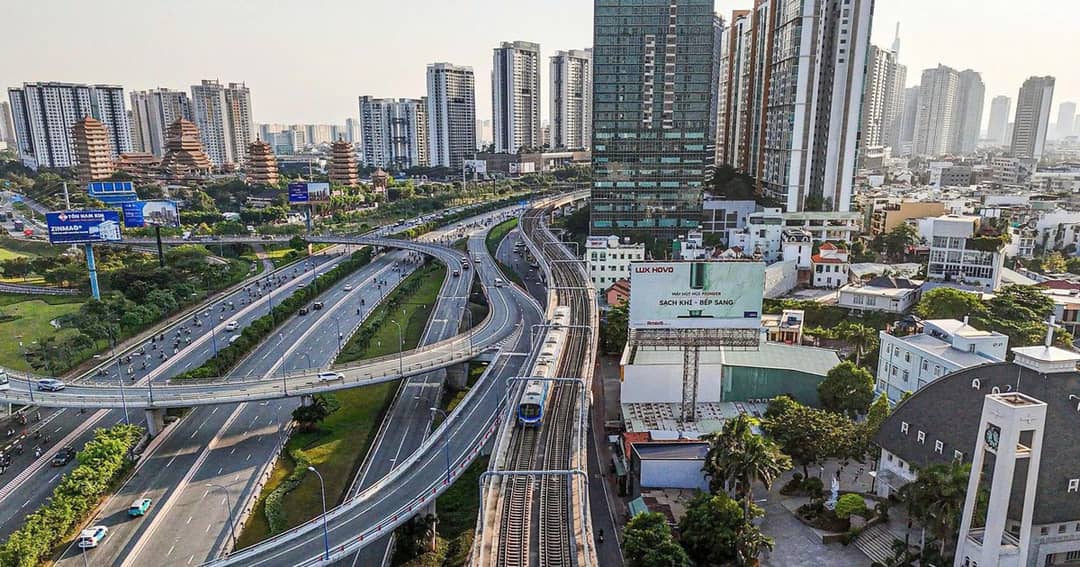
The city is moving toward the “15-minute city” model, where people can access essential services within about 15 minutes on foot. Growth poles and urban centers are connected within about 30 minutes by urban railway, expressways and digital infrastructure.
For the period 2026 - 2030, Ho Chi Minh City sets a target to add about 200,000 social housing units, prioritizing areas near jobs, metro stations and public transport hubs.
By 2050, Ho Chi Minh City plans to develop about 960km of urban railway, combined with 450km of light rail and tram. Public transport passenger share targets 35 - 50% by 2030 and 65% in the period 2045 - 2050.
Mr Richard Mark Leech, Deputy General Director of Phú Long Group, said the 100-year vision is not only about expanding boundaries or building infrastructure. The core is building a lifestyle and creating a foundation of experience for future generations.
Mr Lee Leong Seng, Managing Director of Residential Real Estate Development Department, Keppel Vietnam, said connecting real estate projects with public transport is a complex problem requiring coordination among management agencies, transport operators, private enterprises and consulting experts.
Experts also emphasized ecology as part of quality of life. The southern area of the city is lowland with many rivers, so planning must not only build more urban areas but also develop in harmony with the existing ecosystem.