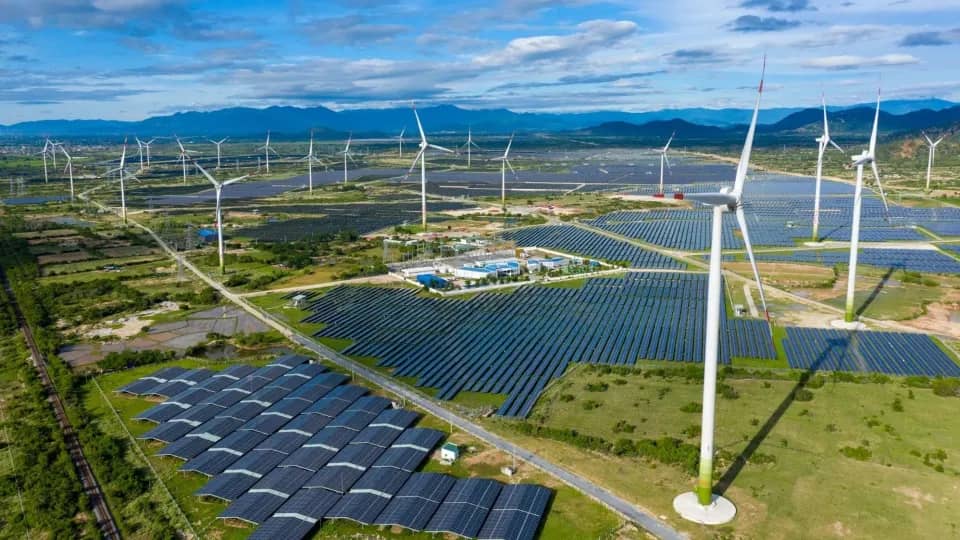
International banks are expanding green capital channels into Vietnam through loans, bonds, and project financing, creating more resources for enterprises to invest in energy transition and sustainable development.
According to an OECD report released in November 2026, Vietnam needs about 73.7 billion USD in additional investment during 2026-2030 and 105.7 billion USD during 2031-2035 to meet emission reduction targets under NDC 3.0. Total demand across both periods reaches 179.4 billion USD.
Data from the State Bank of Vietnam shows green credit outstanding in 2025 reached nearly 780,000 billion VND, up nearly 15% year-on-year, accounting for about 4.2% of total economy-wide credit outstanding. Cumulative green bond issuance from 2020 to 2025 exceeded 1.5 billion USD.
Several international capital channels have been expanded:
| Partner | Form | Scale |
|---|---|---|
| EIB - Techcombank | Climate and environment financing | 200 million EUR |
| HDBank - IFC, FMO, BII | International green bonds | 100 million USD |
| Standard Chartered - Dai Dung, Stavian | MOU signing at COP31 | 200 million USD |
| HSBC - EVNNPC | International syndicated green loan | 105 million USD |
Green credit remains concentrated in green agriculture and renewable energy, while the green bond market still has room to develop. — Paul Xavier, IFC expert
HSBC also discussed with the Government the potential to mobilize 12 billion USD to serve economic transition and sustainable development. The green loan for EVNNPC has an 8-year tenor, used to invest in battery energy storage systems at 70 existing 110 kV substations in the North, and is EVNNPC's first international syndicated USD loan.
However, for financing commitments to turn into actual investments, the market must simultaneously address limitations in project quality, ESG standards, data transparency, and risk-sharing mechanisms.